
Page
CHAPTER 4: PUBLISHING PROPOSALS
Completion requirements
CHAPTER 4: PUBLISHING PROPOSALS
The aim of this chapter is to help you build an understanding of conceptualising a product and developing and presenting a publishing proposal.
4.1. An overview of publishing proposals
After studying this section, you should be able to:
- Evaluate the importance of publishing proposals in the development of a publishing product.
The aim of a publishing proposal is to help the management team of a publishing company (a team including people from sales, marketing, finance, and publishing) decide whether to take on a particular project or not. Publishing proposals are therefore almost always for projects that have not yet started. But although the project has not yet started, a considerable amount of work may have been done by the commissioning editor and her team in researching and conceptualising the product. The commissioning editor is the person who usually writes the proposal.
Most publishing proposals are for these scenarios:
- Where a commissioning editor has an idea for a new product
- Where a commissioning editor has received an interesting new manuscript or proposal from a writer or writers;
- Where a commissioning editor wants to make a new edition of an existing product.
Let's take the first scenario as an example. The commissioning editor has an idea for a new product. Before she writes a proposal for it, she will need to do at least some of the following:
- Talk about the idea to several important colleagues, including the sales team and the marketing team.
- Do market research with possible buyers and/or users of the new product so that she is sure she understands their needs and behaviours.
- Review existing competing products that are similar to her product idea.
- Start refining her thoughts about what kind of product it would be best to make, and who her product is for.
This could take between two weeks and six months. If the results of this research stage confirm that the product would be a good idea, the commissioning editor will then start actively preparing her proposal. These are some of the steps she might take:
- Identify the meeting at which she will present her proposal. Some companies have monthly meetings to consider publishing proposals with dates set up at the beginning of the year, while other companies have a less formal approach, calling a meeting when there is a proposal to discuss.
- Request print quotes (or production quotes, for digital products) for the product specifications that her research makes her feel are appropriate.
- Make sure that the people who will be at the meeting know about her proposal, and, if possible, are in support of it.

Diagram 4.1. Five stages for approving a publishing proposal
4.2. Understanding the market
After studying this section, you should be able to:
Appraise the important role and function of market information, and show an understanding of the market sectors and their specific requirements in the development of publishing proposals and products
Identify and consider the impact of important considerations in the identification of an appropriate product
When conceptualising a new product, you will refer to the market research you’ve done and the competitor analysis that forms part of this. See Chapter 3, and also the template for a Market Intelligence report.
You will also want to think about two other factors: the requirements of the entire market sector that you are competing in, and your company’s strategy to gain market share in that market. These will help you know how the publishing proposal for your specific product fits into a bigger picture, and enable you to persuade the senior managers considering your proposal to invest in the new product.
As a commissioning editor, you need to understand the requirements of your market sector before you start writing your publishing proposal. You will to say clearly how your proposed product fits against these market sector requirements. The table below outlines some of the considerations in the different publishing sectors. However, markets change, and you will need to keep up to date with the latest developments.

Table 4.1 Requirements for different market sectors
As previously mentioned, a target market is different to a market sector. Within a market sector, you will have several target markets, and the market research you’ve conducted will help you define their characteristics.
To keep things simple, we will assume there is only one target market in each segment, and briefly describe the appropriate product for it using four criteria: language, layout, design, and format.
The target market in the Education sector is mainly learners, but the people making the decisions about which products to use and whether to buy them are teachers and parents. They will consider the elements below:
- Language. It is Government policy that all learners should be taught in their mother tongue until they reach Grade 4, so products made for Grades R to 3 should be published in all 11 official languages. The level of language used in textbooks should consider that many learners in the more senior grades learn and are taught in a language other than their home language, e.g. English when they speak isiZulu at home.
- Design. Artwork should be relevant to young readers, and portray people, things, and society that are familiar to them. For example, young learners in the Northern Cape will not be familiar with illustrations that show snow on the ground in December. They will see thorn trees and arid land in their environment and it would be ideal for them to see this reflected in at least some of the artwork in their learning materials. School products may use colour as a pedagogical tool, .g. a science textbook explaining the refraction of light may use colour to show the colours of a rainbow. In general, design should accommodate learners' developmental level, in terms of the size and type of font, whitespace, and the proportion of artwork to text.
- Beware of being biased when you recommend the design for your product. Your life attitudes and experience can cause to you make assumptions which, when interpreted in the design of the product, will result in bias. For example, when briefing a photographer and illustrator to create artwork for a Foundation Phase reader for the Education sector, it might be easy to assume that all South African children live with both their parents, with mum staying at home, the man of the house employed and arriving home at 5pm to find the kids watching TV in the lounge. The photos and illustrations depicting this middle class, traditional family with stereotyped gender roles might not correlate to the life realities of Foundation Phase learners in the province where the target market is located.
- Layout. Learners may be familiar with digital media and may expect to have content made available on the pages of a book in a similar dynamic way. Commissioning editors may choose to use double page spreads and design features as part of the layout. These will form part of the pedagogy, and make it easy for the learner to learn.
- Format. School products are often short and concise, and use a format such as A4, truncated A4, or narrow crown, with saddle stitching or PUR binding, for ease of use and durability.
The target market in the Academic sector is students and their lecturers (for HE textbooks), and professionals and post-graduate students for professional products. What will make products appropriate for them?
Language. Many students and professionals learn in English while speaking another language as their home language. Textbooks need to be written in plain and accessible English. You can consider using definitions for complex technical or scientific concepts, and including these in a glossary.
Design. The artwork used in textbooks won’t be pretty pictures but mind maps, process flow diagrams or technical illustrations. The internal design of textbooks in this sector can use features that support the consumption of content, such as “boxes” that help the reader pause and think critically about a topic. Other suitable design features include sections for revision, reference lists, and extra reading lists.
Layout. Textbooks are used to convey knowledge but should not have lots of dense, uninterrupted text. The layout can use a structure of headings that enables the student to follow the text easily, and a simple numbering structure.
Format. Some professional products, e.g. for medical doctors studying in specialist fields, are published as e-books with embedded content that can be interactive. HE textbooks need to be robust (as students carry them in backpacks), and easy to notate (white space in margins).
The Trade sector contains diverse target markets, namely, general readers of adult fiction in print and e-book format, the parents who buy children’s fiction and non-fiction in print and digital format, the adults who buy scholarly non-fiction, and consumers who buy religious products.
It would be incorrect to say that there are general rules that apply to all genres (or kinds of literary works) and target markets. After all, a poetry anthology published by an independent publisher will look and feel very different to a popular work of fiction translated from Afrikaans into English, which will differ again from a children’s picture book about animals of South Africa.
In principle, the language, design, layout and format should be carefully selected by the commissioning editor to suit the target market and meet their expectations, while differentiating it enough from competitor titles.
When you devise the concept for a product, there is a lot to think about. You have creative freedom but are expected to act within the confines of your publishing company’s strategy and business plans, and the requirements of the market sector in which it operates.
You should be aware that senior managers in your company use strategy tools to guide their decisions about suitable product for the market sectors you serve. A popular strategy tool used to think about product development is the Ansoff matrix.
The Ansoff matrix was developed by the Russian-American H. Igor Ansoff in the 1950s. In the four squares within a square, the Ansoff matrix shows four strategies that a company’s leaders can use to think about the market or markets (the group or groups of customers for a product) they are trying to serve. It looks like this:
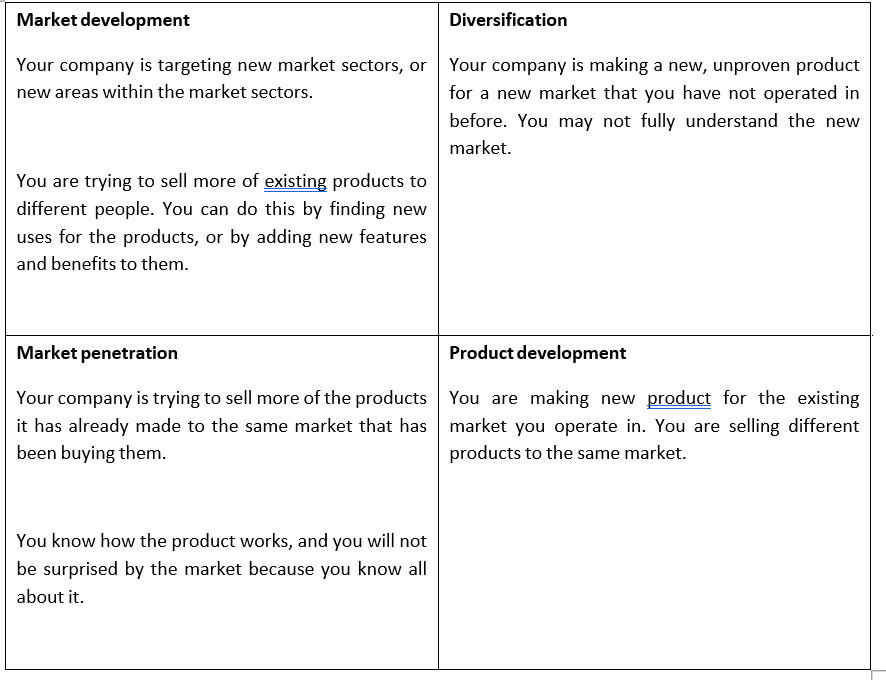
Diagram 4.2. The Ansoff matrix, adapted for publishing
When you are taking a publishing proposal to an approval meeting, don’t regard the product you are
proposing in isolation. You need to know:
- What market sectors does my company operate in?
- Which areas within the sector does my company currently publish for?
- Is it aiming to publish in other areas or for other groups (segments) of customers?
- How does the product I am proposing fit in with the company’s plans and with other products in
- its range (e.g. on my publishing list)?
- In proposing this product, am I proposing product development (new product for the market we already serve) or market development (adding new features and benefits to a revised product to get more people to buy it, or something else?
After studying this section, you must be able to:
- Compare and contrast methods and techniques for generating ideas and conceptualising new products for suitability and effectiveness
- Appraise critical factors and requirements that play a crucial role in the conceptualisation of the product and its impact/influence.
The core of your publishing proposal is the concept for a new product,
which must meet a need in the market. Specifically, the proposal should clearly show how your product will meet this need. You might have a lot of information about the market,
but you need to connect
the bits of information to gain insight.
Insight is a deeper understanding of how everything fits together, and will lead to a better
publishing proposal.
The core of your publishing proposal is the concept for a new product. This concept needs to meet a need in the market. The concept is an idea for a product and must include information on the type of product, how it will address the need in the market, how will it be different from existing competitor product. You will need to have a good understanding of the market – this means using the information gathered during the market research process and connecting the dots to gain insight. Insight is a deeper understanding of how everything fits together. Good ideas and insight will lead to a strong publishing proposal.
So how does one use information to gain insight? Critical-thinking skills can help you to see the links between information and ideas. There are several critical-thinking skills that you can use:
- Analyse the information: Look at all the separate pieces of information you have. Can you see relationships between these pieces of information? What seems relevant?
- Think about the relationships and the reasons: Think about why these pieces of information are linked. What is the relationship between the various pieces of information? Can you see patterns or trends?
- Evaluate what’s important: Think about the information objectively and consider what’s
- important. Prioritise the information and decide what you want to address with your product.
- Suggest solutions: Consider different way to address a problem or need. Be creative – try brainstorming or other techniques (see below) to come up with innovative suggestions.
- Make decisions: Weigh up the different options you have come up with. Consider each option’s pros and cons. Often the best decision is the one with the greatest benefits that requires the smallest amount of effort.
Table 4.2 shows an example of how you can use critical-thinking skills to conceptualise a product. Imagine you have these pieces of information:
- A market report that says that learners are failing geography mapwork.
- A newspaper report that shows the average Grade 9 learner can’t understand basic questions.
- There are very few qualified geography teachers. Maps and their keys are usually labelled in English. Many learners can’t afford protractors or rulers.
- By using critical-thinking skills, you can try to address these issues when you conceptualise a product.

Table 4.2. An application of critical-thinking skills
When you think about generating ideas, there are a few methods which you can use:
Brainstorming: Brainstorming is one of the most common techniques for generating ideas. Start off by writing down a problem. In a small group, offer different solutions to the problem. The aim of brainstorming is to suggest any possible solution. The solutions can be crazy and off-the-wall. Encourage everyone to think creatively and not criticise one another's ideas during the brainstorming stage.
Starbursting: This is similar to brainstorming. Instead of thinking of potential solutions, you ask questions. These questions can start off at a high level – ask who, what, why, when, where and how. As you gather more information, you can start asking more detailed questions.
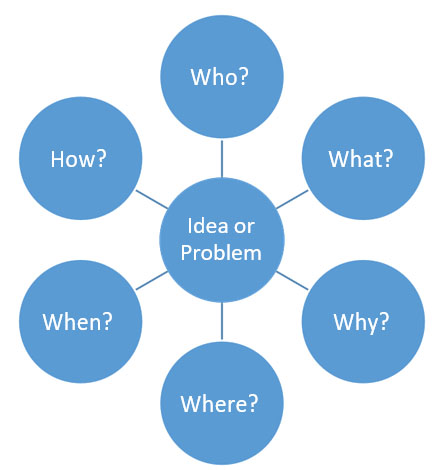
Diagram 4.4. An example of the starburst technique when generating ideas
- Roleplaying: Put yourself in someone else’s shoes! Get a few colleagues together and take on different roles in the value chain. This will allow you to get some user stories. For example, someone could be the author, the reader, the bookshop owner, the teacher, and so on. Talk about what issues you might encounter. Sometimes a different perspective can provide the best ideas.
- Mind mapping: If you already have quite a bit of information and some ideas but you’re struggling to organise it, a mind map is useful. On a large sheet of paper, write down everything you know and then try to group similar information together. This will help you to see relationships between the pieces of information. When you see these relationships as a visual, you may come up with some new ideas of how to conceptualise your product.
- Socialising: This could refer to conversations with your colleagues, but it could also be broader than that. Sometimes people who work in different departments or industries can offer insights. A conversation about something else could spark an idea. Often just talking to people and using them as a sounding board can be really helpful in coming up with ideas.
Lastly, when developing the concept for your proposal, be conscious of any unintended bias on your part. Bias is a partiality that a person has which prevents them from objectively considering an issue or situation. Bias is normal. The problem occurs when a person is not aware that they are biased. Bias can be dangerous if introduced at any time in the publishing process. Chapter 3 mentioned how you should avoid bias in research. When developing a publishing proposal, the commissioning editor needs to read market intelligence reports with an unprejudiced eye to detect any bias. How can you do this?
Watch out for the researcher giving only one side of the story without giving space to opposing viewpoints. Ask, “What information does the researcher take for granted that shapes the recommendations in the report?” Check whether the research uses only negative language to describe competitor products and services, thereby painting your potential new product in a positive light.
Then, when you compile the proposal, take care that in making it persuasive you don’t leave out some facts you know about the market which might make it less attractive. Your aim should be to make a publishing proposal that is as balanced and impartial a recommendation about a suitable product for the market as possible.
Once you have a thorough understanding of the market and you’ve used some techniques to generate ideas, you will be in a good position to conceptualise the product. A useful starting point is to think of yourself as the reader. What would you want from this product? What information or skills would you expect to learn?
You can’t know everything about every subject you might be responsible for publishing, but you do
need a basic understanding. Here are some tips:
- Do some research on the internet and read about the subject. Follow relevant thought leaders via their blogs or on social media.
- Have a good grasp of what is happening in the news – are there developments or trends which you need to consider.
- Attend conferences or public lectures where you can learn more about the subject, or listen to podcasts or TED talks.
Look at similar products. These could be other books that your target market might have used or read. They could also be competitor textbooks that can help you to differentiate your product.
Don’t worry if you don’t know everything about the subject. Remember that you are expected to be a publishing professional and not a tax consultant, expert on politics, social sciences teacher or a lawyer.
The most important aspect to bear in mind when identifying suitable authors is to ensure that they have the necessary knowledge about the topic they are writing on. This is especially difficult if you are trying to use a new author.
You may uncover some potential authors while doing your market research and conceptualising your product. Here are some other practical ways to identify possible authors:
- Look on
social media sites:
- See who is well-respected for their subject knowledge.
- See who may already be writing for a blog or on LinkedIn.
- Attend conferences and listen to speakers and panellists and see whose ideas are similar to your own concept for the product.
- If looking for teachers or lecturers, go to schools and campuses and speak to the staff. Ask them for recommendations.
- When doing market research or sending manuscripts out for review, ask interviewers and reviewers whether they would be interested in writing, or if they can recommend anyone else who might be suitable to be an author. This will help you to create a database of potential authors.
- Listen to the radio and read the news to see who has ideas about the subject and is well- respected.
- Get in touch with your market and find out who they want to hear from.
- Keep your eyes and ears open for potential authors who have been nominated for awards in their respective industries.
- Use your network, within publishing but also beyond the industry.
Once you’ve identified authors, you need to have a conversation with them. It is a good idea to start the conversation by stating that everything you discuss is subject to the project being approved by your publishing company, and subject to contract. The first question to ask is whether they are interested in writing a book or developing a product. Ask them how they might approach the concept of the product. What knowledge and skills would they bring to the project? What do they think would be different about this product? How would they like to convey their subject expertise?
On a very practical level, you need to determine whether the author has solid writing ability, good language skills and that they have the necessary time, interest and capacity to take this project on. Share the deadlines with them so that they know what you would expect of them.
You can also ask the author to provide you with some additional information, such as a CV and an example of their writing.
Remember that there is no point in trying to commission an author if they don’t have the ability,
interest or capacity to work on the product.
There is no point in publishing a product that covers the same subject in the same way as a number of competitors. There would then be no reason to buy your product as opposed to a competitor product. Your product needs to be different.
There are a number of ways that you can differentiate your product. Some examples of differentiating products could be:
- Branding – what does your brand represent or what does the author's brand (their reputation, basically) represent?
- Format and binding – hardback vs paperback or different sizes such as A4 or narrow crown.
- Features – such as additional elements, pedagogical features, interactive assets in an e-book or a narrated CD.
- Service – you can offer additional services such as a training video or after-sales service.
- Distribution – is your product offered in a new market? Or is there a bundle deal with other established or new products?
- Price – how does the price of your product compare, and what value does it offer?
To differentiate your product, you will need to look at what is happening in the broader environment. You will also need to have a thorough understanding of your competitors. We will cover this in more detail in the next section.
A crucial component of your publishing proposal is the product budget. This is the financial description and summary of the proposal, which includes your recommendations about:
- Format or deployment method
- Costs, price, and print or reproduction quantities
The product budget is a tool you use to check whether the proposal you are making will be:
- Viable (feasible, workable, practical)
- Sustainable
- And achieve the benchmarks set by senior managers in your company for sales revenue, gross profit and net profit. (These concepts are discussed in detail in Chapter 5.)
In this section, we will discuss key financial considerations which affect your product budget. Then we go step-by-step through the process of completing a product budget using the product budget template you will find at the end of Chapter 4.
Determining the format and deployment method of the product. To make a sustainable and viable product, you need to make a decision about the most appropriate and cost-effective format product for your target market.
Firstly, you will need to decide whether it is print or digital, or both.
Print products can come in a huge variety. Variables include the following:
- Size
- Extent Cover type
- Use of colour
- Thickness of paper
- Binding
All of these variables will impact the cost of publishing the book in terms of typesetting costs and printing costs. They may also influence the time it takes to produce and print the book.
If you decide to make a digital product, you will make some decisions here as well. These decisions could be to make an e-book, an application (app), a website or a program. With cellphones being widely used in South Africa, you will also need to ensure that any digital output is mobile-friendly and can therefore scale to different screen sizes. Again, all of these variables will have an impact on the cost of producing the book and the time it takes to publish an e-book or other digital product.
When making decisions around print and digital, you should always think of your target market. Use the starbursting technique. Who is reading? What are they reading? Where are they reading? Why are they reading? When are they reading? How are they reading? Think about the user experience and what will be the most useful to them.
Setting the price and product viability. In Chapter 5, we will further discuss price-setting principles with respect to internal and external factors, and the profit margin targets of the company you work for.
The price of a product or service is important to the ongoing sustainability of a business, but it's also important to the long-term viability of a product. This happens in several different ways.
First of all, a product with too little financial value.
Imagine this scenario: you propose a new product, which meets criteria such as gross profit margin targets, and has the support of sales people. However, you estimate that the product will make less than R100,000 in its lifetime. You may find the senior managers rejecting your proposal because the rand value is too low – this could be due to the product having a very low selling price. They may say that the project is not "material" or that the "opportunity cost" is too high. This means that although the project seems to meet the usual criteria, the amount of money that it will bring in to the business will not be worth your time, and the time of your colleagues to make it, sell it, stock it, and market it. Instead, they would rather that you pursue potential projects with greater potential, that are more "material". The "opportunity cost" of a project is the fact that by doing project A, you are unable to do project B. If you have to choose between two projects, senior managers would rather you chose a more "material" project, with the potential to bring in more money – even if the more "material" project costs more to produce, or is riskier. Senior managers are thinking about how your time is spent, and how they would like to get the most value from your time, as well as from whatever you spend on a project.
Secondly, the price of a product or service has an important impact on its long-term profitability.
This is especially true of print products, where the target gross profit margin for the first printrun of a new product will be much lower than the target gross margin on a reprint of that product. Senior managers evaluating a proposal may be prepared to accept a product that does not meet the gross margin target for the first printrun, as long as the product reaches the target gross profit margin for
reprints. Certainly, for educational publishers (whether school- or university-focused), reprints make up the larger part of a business's turnover. As such, if reprints do not reach their target gross profit margins, the profitability of the whole company could be threatened. Based on this understanding, senior managers are likely to reject a proposal for a new print product that does not meet reprint gross profit margins.
The situation for trade publishers may be somewhat different, as this sector tends to be more front list-driven. (For more on front list v back list, see Section 2.1 on important considerations in list- building, 2.2 on front list management, and 2.3 on back list management). In this sector, it may not be important for a book to be priced in such a way that it can be reprint at a target gross profit margin because it may not be reprinted at all, or it may not be reprinted for a long time (it could, for instance, be offered as an EPUB after the first printrun has sold out).
Completing your product budget. To complete your budget, it is important that you have collected all the financial information you will need. You will have obtained this from your research, requests for quotes from various suppliers, and from the finance department of your company.
The financial manager will typically be your point of contact. She will be able to give you the expected profit parameters within which you will have to work, and information about internal costs which you will have to include in your budget. It will help you to schedule a training session with your financial manager to learn how to complete the specific product budget spreadsheet which your company uses. At least the first few times you complete a product budget, it will also be useful to ask her to check your final draft of your budget before you submit it to senior managers.
Refer to the product budget template at the end of Chapter 4. We will now go step-by-step through this.
First, enter all of the development costs, sales price variables, royalty information, proposed quantities and printing costs in the appropriate cells in the Excel® spreadsheet.
Ensure that where required, you fill in the cells for the reprint budget as well.
When you have input all of the information, you will be able to review the results. You will particularly look to see how the budgeted gross profit percentage compares to the parameters required by your company.
Let’s now look at how practically you would do this practically by referring to the product budget template:
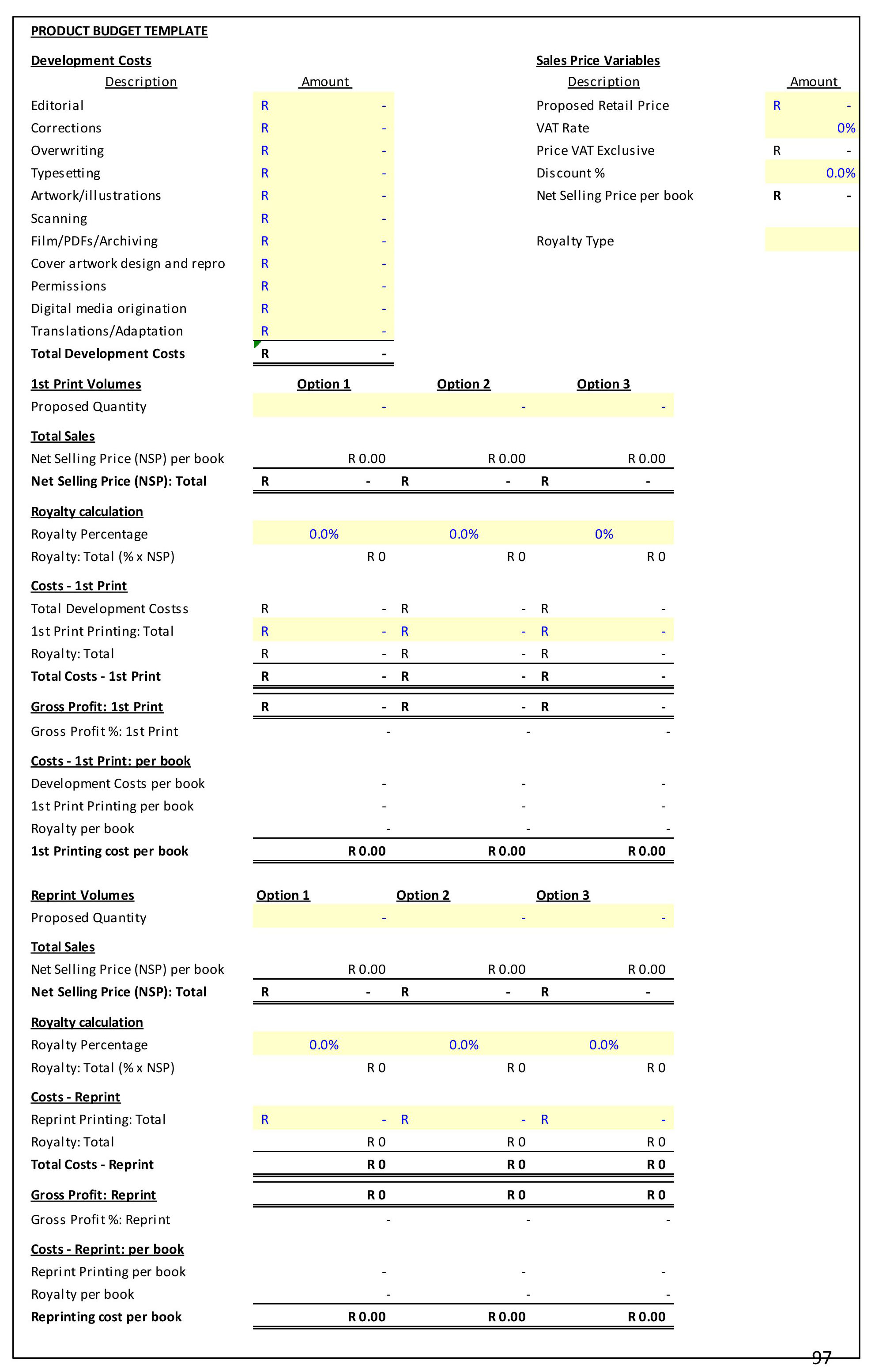
Remember that the numbers in the template above are only for illustration purposes and do not reflect a true scenario.
It will be useful, when you input details into the respective spreadsheet cells, to make the calculations in the cells themselves, rather than on a calculator and then entering the answer in the cell. Using this method means you can go back and see how the result was calculated.
It is important that you do not overwrite any of the formulae in the spreadsheet. It is equally important that you keep all your supporting workings, documentation and quotes as reference, in case you need to explain how you arrived at the results of your budget.
To ensure that you don’t leave out any important information which would make your budget result
wrong, work logically from top to bottom of the template.
First, start with the development costs which you will have obtained from the publishing proposal. Make sure that where quotes you refer to are for page rates, you multiply the quoted rate by the number of pages in the book.
The complete the sales price variables section. Include the royalty rates in the royalty calculation section. Again, make sure that you input these rates in both the first print as well as the reprint sections of the budget template.
The next step is to input, in the relevant cells, the proposed quantities of print volumes for first print and reprint.
You must also input the print costs from the quotes obtained from the printers. Refer to the example template above, and see that the proposed first print quantity for option 1 is 1,000 books. In this instance the printer quote was R30,000. Continue entering the quantities and associated printing costs for the rest of the options, finishing with option 5 with a quantity of 10,000 books and a printing cost of R220,000.
In exactly the same way you should enter the proposed reprint quantities and quoted printing costs. In the example, option 1 is again a quantity of 1,000 and the quoted printing cost of this quantity is R28,000. You will see that although the quantities for option 1 are the same, the reprint cost is lower, because the printer only incurs set-up costs for the 1st printrun.
Once all the information has been input, you should check that you have input the information accurately from your various sources of information. Also make sure that you have not missed any costs out.
Now look at the results of the information you have input. Firstly, does it make sense? Are the gross profit numbers, particularly the gross profit percentage, reasonable?
The important check is that the budget delivers a gross profit percentage which satisfies the required return of the business.
Here is another summary of how to evaluate the product budget once it has been completed. You should carefully consider the following:
- The total development costs are fully absorbed into the first print, resulting in gross profit being lower than the same print quantities on the reprint.
- Printing costs become more economical per book as volumes increase, increasing the gross profit at higher volumes. However, you must consider the real risk of ordering too many books and then having to write off excess unsold quantities.
- Reprint gross profit is as good for 100 books as it is for 1,000 first print books, because no development costs are included, and the printing costs are lower per book.
- If you see that the gross profit percentage is too low, you will need to consider raising your selling price slightly if the market would allow that, cut some of the development costs, change some of the specifications of the book to a more reasonably priced format, and approaching the printers for improved quotes.
- Again, once you have completed all input, and are satisfied that you can have a reasonable product budget to present to management, ask the financial manager to check through it to make sure that, from a financial point of view, the budget which you have prepared is correct and ready to present to management for review.
It is very important that you are as accurate as possible with the financial calculations in the product budget and when you determine the cost and return on investment for a product.
By including costs that are too high in your product budget, you may make a project appear to be not viable although it actually is viable. On the basis of your too-high costs, senior managers reject the publishing proposal and the business loses out on earning the profit that the product could have generated.
Conversely, if the costs in your product budget are too low, the business may dedicate resources of time and money to a project that will fail to deliver the budgeted profit. This will have a negative effect on the profitability of the business as a whole.
If you realise at an early stage in the process of making a product that actual costs are going to be higher than budgeted costs, you need to alert your manager to the problem. There may be a process that you need to follow, such as preparing a revised product budget. If there isn't a process, make sure you tell your manager all the same. If the difference between budgeted costs and actual costs looks like it will be significant, then senior managers may take the decision to stop the project and limit losses. However, certain costs may not be able to be cut (such as the salaries people appointed on contract specifically to work on the project).
Changes to the book specifications, people involved on the project, or disruptions at the printers during the project will not only impact on the timeline and possibly the quality, but also on the costs and therefore on the gross profit.
If the fixed costs for the first printrun need to increase, e.g. the per-page cost of typesetting or the artwork cost, senior managers may decide to go ahead with the project if the gross profit on the reprint is good, or if it will make up for the reduced profit on the first printrun.
One way to limit the effect of changes is to build in a contingency amount for changes – a reserve amount in the budget that you can use to fund increased costs, within predetermined and managed authority levels.
Managing project costs effectively is extremely important to minimise the risk of overspending. You need to continually check (on a monthly basis, or even more often) that the resources allocated to the project are being used in the best way possible. If you have saved money in one area (e.g. typesetting), and need a little extra in another area (e.g. artwork), you could use the saving to offset the overspend, as long as the product budget overall stays the same.
After studying this section, you must be able to:
- Appraise critical factors and requirements that play a crucial role in the writing of a publishing proposal and their specific impact and influence.
- Appraise proposal-writing methods and skills for suitability and effectiveness.
This section of the publishing proposal needs to provide an overview of the market. The publishing proposal must contain all the necessary information to decide whether to publish a product. You need to show a thorough understanding of the market, and how the product you are proposing will meet a need in the market.
To do this, you will need to include information and trends. A useful tool for looking at all the factors which have an impact on the market is the PESTLE analysis as shown in Diagram 4.5.
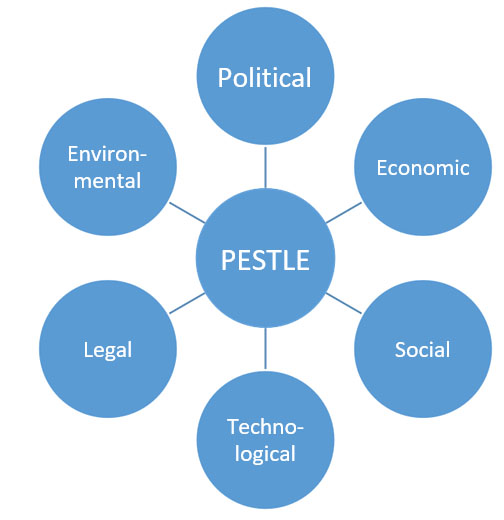
Diagram 4.5. PESTLE analysis to understand the market
Think about how these factors influence your publishing proposal within the context of the market. Below are some examples of the types of questions you could ask when thinking about each factor:
- Political
- Is there a curriculum change happening?
- Are there student protests or movements such as #Feesmustfall?
- Is there an emphasis on TVET colleges?
-
Economic
- Are bookshops reporting lower sales?
- Is government setting money aside to buy textbooks?
- What is a reader willing to pay for an e-book?
-
Social
- Is there a drive for learners to learn in their home language?
- Are parents concerned about literacy rates?
- When are students most likely to use digital products?
-
Technological
- Are users likely to use digital products?
- What kinds of devices are readers using?
- Is there new technology which impacts book production, such as a digital-first workflow?
-
Legal
- What does the current copyright legislation mean for your product?
- Are there changes in laws which will impact your product?
-
Environmental
- What quality paper does your book need to be printed
on?
- Can you put some content online so that your book is shorter?
- What quality paper does your book need to be printed
on?
You do not need to include information about all of these elements, but think about how they might influence the publishing proposal. By thinking about all of these elements, you should be able to answer these questions:
- Who will use this product, and why?
- Why will they buy this product, and how much will they spend? When will they use this product, and for how long?
- How will they buy this product, and in what format?
All this information should be summarised in a few paragraphs. It is advisable that you also get input from the sales and marketing team, especially sales reps, when you prepare this section of the publishing proposal. Often these colleagues will have insight into the market as they operate in the field by calling on lecturers, schools, and bookshops.
A competitor analysis involves finding out as much as you can about your competition. Think about what other competitor publishing companies are doing at the level of their businesses. Can you identify a publishing or sales strategy? Is there a way that you can use this information to your advantage?
You also need to look at specific competitor products. This will help you to differentiate your product, but it also gives you an opportunity to publish a better product. Ask yourself the following questions:
Why do people like this product? What is the product’s content? Does it have a specific market? How much does the product cost?
Does the product have any additional value-adds?
A useful tool to think about competitors is a SWOT analysis. A SWOT analysis is a method where you identify the strengths and weaknesses of competitor products. When you have listed these, think about how the strengths of these other products could be a threat to you, or how the weakness of these products could be opportunities for you. Look at the matrix in Diagram 4.6.

Diagram 4.6. A SWOT analysis matrix
If you already have a concept in mind for a product, you can also use the SWOT analysis on that. Are there particular strengths in your publishing proposal which you can turn into great opportunities, or are their weaknesses in your publishing proposal which might be a threat to the success of the product? Try to be objective!
Sometimes you might have a non-traditional competitor. This could be an organisation that offers similar content or a similar service, but uses a different business model. People sometimes forget to consider non-traditional competitors, even though these competitors can be a huge threat.
When doing a competitor analysis, it is important that any information that you gather is done legally, but also ethically.
You cannot ask staff members at other companies about their strategies, processes or costings. All the information you gather must be in the public domain. It would be unethical (and illegal), for example, to hack in to a competitor’s customer database to gain information.
Read more about the ethical standards of the publishing industry in Chapter 6.
It is useful to summarise this information in a few paragraphs. If it’s appropriate, you can also include a table that lists the competitor products, the publishing company, the authors, the target market and the price, along with a summary of their strengths and weaknesses.
This is probably the most important part of your publishing proposal as it is the actual idea behind the product. The concept of the product is what can convince the management team to invest in the product. You need to sell the idea of the product internally – this means, sell it to your colleagues, including the management team.
Start this section with a summary of the content. Write about the subject of the product, and what its approach is. Briefly outline the target market. Talk about the style of the product – is it an academic textbook, a picture book, a technical manual or a collection of short stories? Include any other information that you think is really important for decision-making. This should be a couple of paragraphs.
Consider including a proposed table of contents, especially for an Education or Academic textbook. This will give more details about what the product is about. It would be even more useful if you explained what each chapter contains – perhaps you could list the main headings of each chapter.
It’s important to include your ideas about the layout of the product. This will give an idea about the look and feel of the product, but also influence costs. Think about the features you would like to include. The list of possible features is endless, but some common features to consider are listed below:
- Checklists Glossary
-
Pedagogical features
to support learning
- Examples
- Case studies
- Exercises
- Assessments Templates
- Photographs and illustrations Annotations
- Cartoons
- QR codes or weblinks.
It is useful to include these features when you write about the customer value proposition (see Section 4.4.4 below) as well as the unique selling points (see Section 4.4.5 below).
Once the product is published, a strong concept can be the difference between someone picking up the book, or considering the digital product, and actually deciding to buy it.
Customer value proposition refers to what your product can do for the customer. In other words, what value will this product provide to the reader? What problem will it solve? How will it improve their situation, or how is it relevant? What benefits does it provide the customer, and can this value be quantified? How is your product different from the competitors’ products?
Your customer value proposition should include the following:
- Who is the product aimed at (target customer)?
- What can your product do for them (statement of the need or opportunity)? What is the competitor product?
- What is your product (name and product category)?
- And how can your product solve their problem (statement of benefit)?
Most importantly, the customer value proposition should tell the customer why your product is preferable or better than the competitors. This is often linked to a unique selling point that is discussed in the next section.
4.5.5 Unique selling points
Unique selling points (USPs) can refer to anything that differentiates your product from a competitor’s product. These USPs should not just make your product different though, but they should make it better. The USPs will be what convinces someone to choose your product.
Think back to your SWOT analysis. Are there any weaknesses that you can use to your advantage? You might want to focus on these questions:
- What will make your product different?
- Why would people choose your product instead of another product?
- Does it include more information than other products?
- Is any of the information new or newer? Does it have a different angle or perspective?
- Will it be the first of its kind?
- If it's a digital product, will it offer new functionality?
4.4.6 Project team
Many people are involved in publishing a product and each person plays a different role. In this section of the proposal, list all the major members of the project team. This will show which in-house staff will be involved and if freelancers need to be commissioned.
The most important members of the team are the authors. List your authors and give a short biography for each, focusing on why they are suitable to write on this project. It is possible that you might not know exactly who your authors will be at this stage. If so, you an describe the kind of author you would like to contract, for example an industry practitioner, an experienced teacher, a lecturer who has a PhD in the field, or a thought leader that will generate some marketing appeal.
Other key people to include as part of the project team in your publishing proposal are: Commissioning editor
Project manager Copy-editor Illustrator
You might not know which other freelancers or suppliers will be involved at this stage. You could make suggestions for people that you want to include in the project, especially if you think they would have an impact on the final product.
Listing all the members of the project team will influence senior management’s decision to approve
the project as it will show the resources needed to make the product.
4.4.7. Project schedule
The project schedule is important as it helps to plan at what time resources such as people and money will be used. In other words, it will show when you will be busy with the project, as well as when the rest of the in-house project team will be working on it. It will also help senior managers understand when they will need to spend money and when they will receive a return on investment (after the publication date).
Include the key milestones as shown in Diagram 4.7.
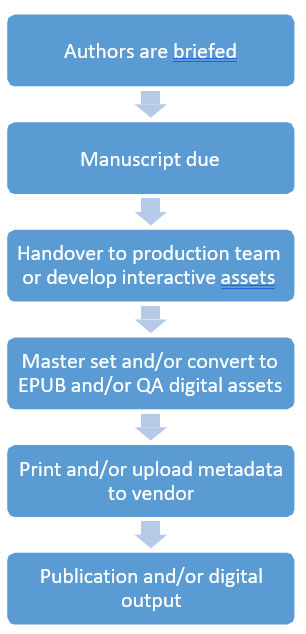
Diagram 4.7. The key milestones of a project schedule
Lastly, the schedule will give the sales and marketing teams an idea of when they need to start promoting and selling the product.
4.4.8. Risks and opportunities
Opportunities refer to anything that could have a positive impact on your product. Risks or threats refer to anything that could negatively impact your product. These could be factors within the broader market, in-house factors or aspects of the product itself.
Think about your SWOT analysis
and how the strengths
and weaknesses you identified might be opportunities or threats.
It is useful to put these in
a table such as the example
below.
Last modified: Thursday, 18 May 2023, 9:43 AM